• Skip to main content
  • Skip to primary sidebar
  • Skip to footer
  • Add A Testimonial
  • Testimonial List (Admin)
The Law Firm of Anthony Diaz

The Law Firm of Anthony Diaz

(407) 565-5908
Listen to the Divorce Hour

  • About Us
  • Divorce Services
    • Your Divorce Options
    • Collaborative Divorce
    • Uncontested Divorce
    • Mediation
    • Arbitration
  • Family Law Services
    • Dissolution of Marriage
    • Child Support
    • Custody/Time Sharing
    • Post Resolution Modification
    • Pre and Post-Nuptial Agreements
    • Paternity
    • Limited Scope Representation
  • Blog
    • Blog
    • In The News
  • Resources
    • Recommended Resources
    • Divorce Hour Interviews
  • Contact Us

Postnuptial Agreements

Postnuptial Agreements: Weighing the Benefits

September 16, 2023 By Anthony Diaz

If someone asked you what the benefit of a prenuptial agreement is, you likely would have some kind of answer or at least, a general understanding of why people sign prenuptial agreements. But postnuptials are less often used and are seen as a bit more controversial to many.

But there are benefits to postnuptial agreements, and in the right situation, a postnuptial agreement can help you in ways you probably didn’t think about.

What is a Postnuptial Agreement?
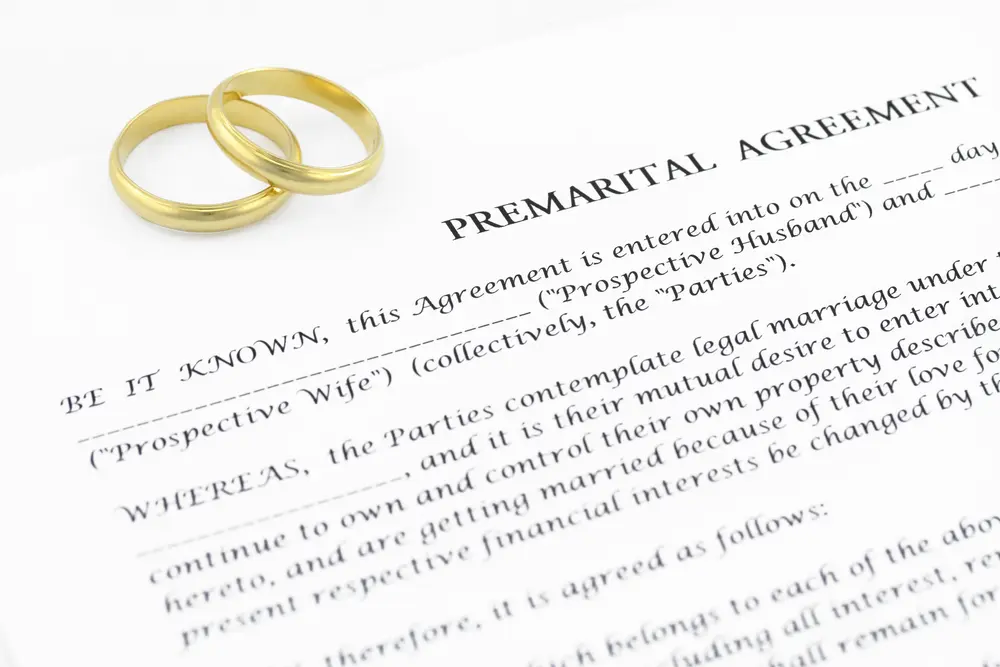
Premarital Agreement

A postnuptial agreement is, as the name implies, an agreement that you sign with your spouse that is almost exactly like a prenuptial, except for the fact that it is signed during the marriage, not beforehand.

The agreement can address things like who will get what property, what property is considered marital or non-marital, alimony, use of the marital home, and other issues.

Married couples are not supposed to be adversaries, and they certainly are not at “arm’s length” from each other, as parties to a contract are supposed to be. There is the inherent risk of coercion, pressure, or misrepresentation between spouses who are signing a contract between them, whether done purposely or whether it happens just because of the nature of the marital relationship.

To be valid, there must be witnesses to the signing of the agreement, which must be in writing, and although a married couple likely already knows each others’ finances, assets, and possessions, a full financial disclosure to each spouse must be made.

This means producing all relevant books and records—it is not enough to just say a spouse had access to records or “could have looked at my bank account.”

The Benefits of a Postnuptial

So why would anybody want a postnuptial agreement?

In many ways, the reasons are the same that anybody would want a prenuptial agreement: to minimize or avoid completely the time, heartache, and expense of a contentious, bitter divorce, should that happen.

A postnuptial agreement can give the parties some security, knowing what exactly they will get, keep, or give up in the event of a divorce. That is in addition to the security of knowing that there will be no or minimal fighting over these things should a divorce happen.

Postnuptials may help keep marriages intact. A couple on the verge of a divorce may opt to stay together and try to make things work if they know that there is a postnuptial in place. So, a party may say, “We can try to work on the marriage if we come to an agreement as to what happens if things don’t work out.”

Avoiding Risks or Waste of Marital Assets

A spouse may opt to stay in a marriage despite knowing that one spouse is taking a big business financial risk or knowing that a spouse is wasting money. A spouse may just have a sense that something is being hidden, money is being spent, or that loans are being taken out by the other spouse. Rather than just leave the marriage, that spouse may be more inclined to stay and work things out, knowing a postnuptial is in place.

Inheritances

A postnuptial can help you keep assets that are yours but which you may want to use to help the marriage.

For example, imagine that you come into an inheritance. That is, at least at first, your property. But the marriage needs that money—perhaps you want to pay off the mortgage, help with debt, help your spouse start his or her business, or use the money for anything else that benefits the marriage.

By doing that, you potentially transform that inheritance from non-marital property, not subject to division, into marital property that could be divided in a divorce.

But a postnuptial can prevent that. If the spouses agree that the inheritance is and remains non-marital property, it frees that money up to be used to benefit the marriage, without the inheriting spouse fearing that if there is a divorce, that non-marital property will be considered to be marital.

Using Non-Marital Assets

A postnuptial agreement can allow spouses to put one spouse’s money into an interest-bearing account or into some other kind of investment and use the interest however they choose, without fear that doing so would make the principal investment into marital property, subject to division in divorce.

Protecting Outsiders Gifting Assets

Even third parties outside the marriage may benefit from a postnuptial.

Take the parents of a spouse who want to help the new couple buy a home. However, they want to make sure that if there is a divorce, the home (or money from the sale of the home) goes to their child—that it is not divided up between the spouses on divorce.

A postnuptial can specify that a gift from someone outside the marriage to a spouse remains the property of that spouse, thus allowing the third party (the parent in our example) to give whatever is needed and allowing the marriage to benefit from the use of the gift.

Sacrifices for the Marriage

Postnuptial agreements can make it easier and safer for one spouse to forego their career for the benefit of the marriage.

Imagine a spouse who gives up a career opportunity to help the other spouse with their business or to help raise kids. That spouse can be protected in the event of a divorce through the use of a postnuptial, making it safer and more palatable for the spouse to give up career or other personal opportunities to help benefit the marriage.

Changes in Your Life

Any change in lifestyle or situation that could affect finances may call for a postnuptial agreement. This can include blended families, or someone losing a job, or getting a  significant promotion. Inheritances, bonuses, financial windfalls, or even medical hardships may cause a couple to want to make sure they are protected in the event of a divorce.

A postnuptial agreement can be a valuable tool to help you protect your assets and your marriage.

Anthony J. Diaz is an experienced family law attorney focusing on Mediation and Collaborative Divorce. His offices are located at 2431 Aloma Ave Suite #124, Winter Park, FL. 32792 and 3720 Suntree Blvd., Suite 103G, Melbourne, FL. 32940.

You may contact Anthony Diaz by calling 407-212-7807 or by email an*****@************aw.com or visit anthonydiazlaw.com for more information.

And if you found this article helpful, please leave us a review HERE.

Filed Under: Prenuptial Agreements Tagged With: Postnuptial Agreements

Why Do Couples Sign Postnuptial Agreements?

February 10, 2022 By Anthony Diaz

You have probably heard of, or you are aware of, a prenuptial agreement. A prenuptial agreement is an agreement that details what will happen to certain property named in the agreement, in the event of a divorce. It may also account for things other than property, such as alimony or attorneys fees.

What About After the Marriage?

Prenuptial agreements, as the name implies, are signed before the marriage takes place. But many people are unaware that there is another type of agreement that can be entered into between married couples after the marriage, called the postnuptial agreement. Although not as well known and certainly not as common as a prenuptial agreement, a postnuptial agreement may have some use to some married couples.

What is in a Postnuptial Agreement?

A postnuptial agreement does and can include everything in a prenuptial agreement. The only real difference is the time of the signing of the agreement, as a postnuptial will be signed while the parties are actually already married.

The postnuptial agreement can discuss what property will remain that of either spouse as non-marital property, thus making that property non-divisible on divorce. It may specify that some property will be divided on divorce and state exactly how the property will be divided between the spouses.

It may detail which spouse will be liable for which debts, who will live in the marital home upon divorce, or who will pay temporary attorneys fees or expenses while the divorce is going on.

Benefits of a Postnuptial Agreement

Just like a prenuptial, a postnuptial has the benefit of minimizing fighting later on in the event of a divorce. By agreeing to certain issues beforehand, the parties are minimizing what will be fought over when and if the divorce happens. In that way, a divorce may be cheaper, or quicker, given that there are fewer issues to fight about.

Are They Valid and Binding?

But one problem with a postnuptial is that the parties are already married when the agreement is signed. This can be a problem; the law doesn’t want a husband and wife to be at odds or to be in an adversarial position to each other.

Whenever contracts are signed in any capacity, the law wants the parties to a binding contract to be at “arm’s length” from each other, meaning that they are independent, neutral, and to some extent, both looking out for themselves–something that a married couple definitely is not.

Requirements for a Binding Agreement

This means that if certain requirements are not met, the postnuptial agreement can be challenged in court and potentially invalidated.

While in many cases, oral agreements are enforceable, when it comes to postnuptial agreements, they are not—postnuptial agreements must be in writing. Additionally, simply having a husband and wife sign the agreement will be insufficient; the law requires that there be two witnesses to the signing of the agreement.

There must be a full financial disclosure between the spouses. Simply saying, “We were married, he had access to the accounts, he knows what property I had when we signed the agreement,” will not suffice. It does not matter how much each spouse actually knows about the other’s property, holdings, income, bank accounts, or finances—full disclosure must be made by each spouse to the other before the agreement is signed.

Holding something back, or being less than truthful about finances, is one way that an aggrieved spouse, upon a divorce, will try to challenge the validity of the postnuptial agreement.

Although in most cases, courts do not look at who made out better in a contract, the divorce court will, with a postnuptial agreement. That means that one side should not get everything, and the other get nothing. Effort should be made for the agreement to be somewhat balanced as to both spouses.

Why Sign or Enter Into a Postnuptial Agreement?

There are many reasons you may want to enter into a postnuptial agreement. Often, the reasons may have to do with a spouse who has done something wrong or where there is suspicion of wrongdoing or wasting of marital assets.

For example, if a spouse were to develop a gambling habit, or where a spouse may be spending excess money on drugs or alcohol, the other spouse may not want to leave the marriage—but that spouse may want to protect him or herself, knowing that if the problem continues, a divorce may be a possible option.

If a spouse suddenly incurs significant debt, that may be a reason. For example, imagine a spouse who, against the wishes of the other spouse, takes out thousands of dollars in debt to fund a business. The other spouse may be supportive—but also may not want to be saddled with that debt in the event that there is a divorce.

Sometimes, a spouse just suspects something is off. Perhaps your spouse seems to be hiding money, finding money in places you did not know existed, or buying things you did not think you could afford. Maybe there is money in joint bank accounts that seems to be disappearing faster than you can explain.

If you suspect that another spouse is exerting excess control over what should be marital money, you may want to immediately know what assets are there, what the other spouse actually owns or makes, and to make sure that when and if a divorce happens, you are not left with nothing, or having to search endlessly for the financial truth about your spouse’s finances when a divorce happens.

One situation where a postnuptial may benefit you would be to protect the inheritance of children from a separate, prior marriage. You may not want to lose property in a divorce that you are holding for your children of a previous marriage to inherit. A postnuptial can protect this property.

Could a postnuptial agreement be right for you? We can help you make that determination and help you understand what can and should be included in your postnuptial agreement.

Anthony J. Diaz is an experienced family law attorney focusing on Mediation and Collaborative Divorce. His offices are located at 2431 Aloma Ave Suite #124, Winter Park, FL. 32792 and 3720 Suntree Blvd., Suite 103G, Melbourne, FL. 32940.

You may contact Anthony Diaz by calling 407-212-7807 or by email an*****@************aw.com or visit anthonydiazlaw.com for more information.

And if you found this article helpful, please leave us a review HERE.

Filed Under: Prenuptial Agreements Tagged With: Postnuptial Agreements

Primary Sidebar

Recent Posts

  • How to Calculate and Modify Child Support: A Practical Guide for Parents
  • When to File for Divorce: Fourth Quarter or After January 1?
  • Child Support Essentials: Understanding Your Rights and Responsibilities
  • Divorce and Making a Smooth Back-to-School Transition
  • Understanding the Dissolution of Marriage Process: Key Insights for a Smooth Transition

Footer

The Law Firm of Anthony J. Diaz
2431 Aloma Ave Suite #124,
Winter Park, FL 32792
(407) 565-5908

3270 Suntree Blvd,
Suite #103G,
Melbourne, FL 32940
O: (321) 216-9166
F: (407) 374-3982

Privacy Policy

Copyright © 2026 - All Rights Reserved | Log in