• Skip to main content
  • Skip to primary sidebar
  • Skip to footer
  • Add A Testimonial
  • Testimonial List (Admin)
The Law Firm of Anthony Diaz

The Law Firm of Anthony Diaz

(407) 565-5908
Listen to the Divorce Hour

  • About Us
  • Divorce Services
    • Your Divorce Options
    • Collaborative Divorce
    • Uncontested Divorce
    • Mediation
    • Arbitration
  • Family Law Services
    • Dissolution of Marriage
    • Child Support
    • Custody/Time Sharing
    • Post Resolution Modification
    • Pre and Post-Nuptial Agreements
    • Paternity
    • Limited Scope Representation
  • Blog
    • Blog
    • In The News
  • Resources
    • Recommended Resources
    • Divorce Hour Interviews
  • Contact Us

Anthony Diaz

Divorce Decoded: 10 Questions Answered

December 1, 2023 By Anthony Diaz

If you are headed for a divorce, it may seem like your future is blurry and confusing. You probably have a host of questions, both about your life post-divorce and about what will happen to you or your kids in the actual process of the divorce.

There is no shortage of questions, but let’s take a look at 10 common questions that people have when they go into a divorce.

1.  What Will Happen to the Children?

Divorce

This is a question that will depend on each individual case or situation, but assuming that both parents are fit and competent and have a meaningful relationship with the children thus far, a court must legally assume that a time-sharing arrangement where both parents have equal time with the kids is in the best interest of the children.

There are things that can alter this shared time-sharing, such as a parent’s living arrangements, whether equal time is not in the child’s best interest, or whether a parent has a lifestyle that isn’t conducive to equal time-sharing (for example, a parent who travels extensively for work).

2.  Will I Get Alimony?

Whether a spouse will get alimony largely depends on the duration of the marriage. Generally, shorter-term marriages, which lasted fewer than seven years, will ordinarily not get alimony (although it is possible), while a marriage lasting from 7 to 17 years has a better chance of getting alimony. More than 17 years, and there is a general assumption that alimony will be awarded—if there is a need.

Divorce cannot leave one spouse destitute and the other rich; both spouses are entitled to live the lifestyle they were accustomed to, to the extent possible. That said, often, when couples divorce, they will have to downgrade their lifestyles to some extent.

That’s because the court will also look at the ability of the paying spouse to actually pay. Divorced couples no longer have combined incomes, and it does happen that a court finds that a spouse cannot afford to pay alimony, even though it may be needed by the receiving spouse.

3. What Kind of Alimony Can I Receive?

Alimony can be awarded on a short-term basis to help restart someone’s life or even to help rehabilitate a spouse—for example, paying for educational expenses, paying alimony while a child is an infant, or paying while allowing a spouse to pursue a new career.

Alimony can also be awarded just for a shorter time period, without a “goal” of any kind.

In 2023, Florida ended permanent alimony, so as of now, that is no longer an option for alimony.

4.  Can I Stay in the Marital Home?

If parties cannot decide on their own who will live in the marital home while the divorce is going on, a party can ask the court to live in the home while the divorce is pending (or, if the home is ordered sold, until the home is actually sold).

A court will look at who has the means to live elsewhere and who does not, as well as what is best for the children. Any compelling reason why one spouse should be able to temporarily live in the marital home can be considered by the court.

5.  Will I Lose All My Property?

It is highly unlikely that anybody loses all of their property in a divorce. Only property considered marital property will be divided between the parties by the court. So, property that belonged to one spouse and remained the property of only that spouse, even throughout the marriage, will be considered non-marital and, thus, not subject to any division at all.

Property that is marital—that is, it was acquired during or appreciated in value during the marriage—will be divided.

Florida does not just divide property 50%-50%, rather, the court will look at what is equitable. This includes seeing which spouse made contributions to the property, which spouse put effort into the property, or which spouse may need the property (or the value of the property) more than the other.

If property is marital, almost any property can be divided by the court. If it cannot be physically divided or shared, like a home or a business, the court will order the property sold and the proceeds divided as the court thinks is appropriate. Property may have to be appraised or evaluated to see what its value is before division.

6.  Who Will Pay Bills During the Divorce?

A divorce case could take a long time to resolve if it is not settled quickly and amicably. While the divorce case is going on, bills and expenses are mounting—including bills like car payments or mortgages that must be paid.

Your family law lawyer can ask the court to make a temporary determination of who will pay what bills while the case is going on to keep the spouses from going into financial free-fall before the divorce is finalized.

7.  How is Child Support Calculated?

Florida uses a mathematical formula to determine child support. The combined incomes of both parents are used as a starting point. Spouses often argue about what each others’ combined income actually is. But once that is determined, the income numbers go into the formula.

The formula also takes into account how much time the children are with each parent. That means that parties may get very little child support if time-sharing is about equal between the parties, while support may increase if one parent gets the majority of overnights with the children.

8.  How Will I Pay an Attorney?

In some cases, where one spouse has a demonstrated ability to pay, and the other spouse can show that he or she cannot afford an attorney, the Court can order the higher-earning spouse to pay the attorneys fees of the lesser-earning spouse.

9. How Long Does a Divorce Case Take?

As you may expect, the answer to this question depends on how much there is to fight over. Spouses who can amicably resolve issues or go to mediation and work things out have a better chance of resolving their cases more quickly. Likewise, couples with no kids, and few assets, have a better chance of resolving their cases more quickly.

In an ideal scenario, where couples can work things out and come to agreements relatively quickly, a divorce could be finalized in about three to six months, but more contentious, argumentative cases can take years.

10. Can My Divorce Agreement or Court Judgment Be Changed Later on?

Although things like alimony, child support, or time-sharing can be altered or amended by a court later on, it is not an easy thing to do. There must be serious and permanent changes to allow a court to modify something you previously agreed to or which the court previously ordered. That means that you should focus on getting your divorce right during your initial case.

You may have many more questions than these. Anthony J. Diaz is an experienced family law attorney focusing on Mediation and Collaborative Divorce. His offices are located at 2431 Aloma Ave Suite #124, Winter Park, FL. 32792 and 3720 Suntree Blvd., Suite 103G, Melbourne, FL. 32940.

You may contact Anthony Diaz by calling (407) 565-5908 or by email an*****@************aw.com or visit anthonydiazlaw.com for more information.

And if you found this article helpful, please leave us a review HERE.

Filed Under: Divorce, Divorce and Children Tagged With: Divorce

Parenting Plans: The Advantages of Making a Parenting Plan

December 1, 2023 By Anthony Diaz

Let’s say that you are in the process of a divorce, and things look like they are being finalized. It seems like you and your spouse have agreed on many issues—including issues related to the children. But then your attorney tells you that you and your ex need to agree on another document — a parenting plan. It seems like a long, detailed document…do you have to do it? What are the benefits of doing a parenting plan…?

What is a Parenting Plan?

Parenting Plans

Parenting plans are relatively new in the world of family law. First required in 2018, parenting plans are a roadmap for parents to figure out almost every aspect of co-parenting children’s lives. The parenting plan is as long as it is because it covers almost every conceivable issue that divorced couples may encounter when it comes to making joint decisions about a minor child.

The model parenting plan, developed by the Florida Supreme Court can be found here.

The parenting plan will have time-sharing schedules, but it goes beyond just time-sharing and visitation. It will also cover things like who gets the kids during which holiday breaks, who has the right of first refusal if a parent cannot watch a child, who will take and pay for the kids’ medical expenses, and extracurricular activities.

It will handle and address emergencies, vacations, school conferences, pick up and drop off locations, and a host of other details that you, in the midst of a divorce, and likely never having encountered this situation before, would never have thought of otherwise.

Your parenting plan is a plan that is agreed to by both parties—a judge can impose one on you, or else, create their own order, but obviously, you would much rather develop the parenting plan with your spouse, and work out arrangements that are best for both of you as opposed to leaving these decisions in the hands of a judge.

There actually are multiple parenting plans, some for parents who are more amicable and do not need so many details arranged in advance, and others that are more detailed, for parents who may anticipate fighting and conflict, and would rather have all the details agreed to in writing in advance. There are even parenting plans for parents who are or anticipate living a good distance from each other.

The Benefits of a Plan

Why make a plan? Even if you have to do it legally, what are the advantages of even doing one, or putting time or effort, or consideration into it?

The main advantage is avoiding conflict—and potentially litigation—later on.

The parenting plan lets both parents know what is going to happen in the future and informs both of their rights when it comes to the child.

In the old days, a typical mediation or settlement agreement may not have addressed every single minute detail of a joint child-rearing arrangement. Parents, usually new to the divorce process, would not know what issues will or could come up next month, year, or ten years down the line.

As a result, the typical medication or settlement agreement was often open to interpretation or ambiguity. Parents who had conflict would look to their agreement to see which parent was in the right and would find nothing in their divorce paperwork addressing what they were looking for.

The result would be fighting, conflict, no way to know who was “right,” and ultimately, if it got bad enough, ex-spouses would end up back in court.

Save the Fighting

On the surface, a parenting plan seems like more to fight about. It’s a long detailed document that you and your ex are going to have to agree to. But parenting plans are written in plain, easy-to-understand language. They have fill-in-the-blanks or lines for parents to write things in.

That gives them a big benefit: you and your ex can sit down together (to the extent possible), and try to discuss, and agree to things in advance. Of course, if you have a family law attorney, you can and should discuss these things with him or her first—but the ease and plain language of a parenting plan does provide some flexibility for you and your spouse to come to some agreement, even on some of the issues, before and instead of spending a lot of money on legal fees.

The end result is that you actually have less to fight about in your divorce because all of these details have been resolved separately by you and your ex-spouse.

In Your Hands

The parenting plan has another advantage, that is common to other forms of resolved conflict, like mediation: you are putting things in your own hands, instead of a judge’s.

In court, a judge could decide whatever they want when it comes to any of the items on that extensive parenting plan. In court, in the hands of a judge, there is no “back and forth,” that is, you cannot say to your spouse “I will let you do this if you let me do that.” It is all up to the court.

But the parenting plan empowers you. You can “give up” the items on the plan that are not as important to you, and fight for the things that are important to you. You can re-write some of the language, add things, or create new provisions that may be unique to your own specific situation.

When you are finally done, you will be grateful that you have a “roadmap” to co-parenting with your spouse. You will have a document that specifically says what you and your spouse can and cannot do. In the end, if done properly, the parenting plan will potentially save you a lot of time, arguing, conflict, and money.

Questions about child custody, visitation, time-sharing, or your parenting plan?

Anthony J. Diaz is an experienced family law attorney focusing on Mediation and Collaborative Divorce. His offices are located at 2431 Aloma Ave Suite #124, Winter Park, FL. 32792 and 3720 Suntree Blvd., Suite 103G, Melbourne, FL. 32940.

You may contact Anthony Diaz by calling 407-212-7807 or by email an*****@************aw.com or visit anthonydiazlaw.com for more information.

And if you found this article helpful, please leave us a review HERE.

Filed Under: Co-Parenting, Divorce and Children Tagged With: Children, Parenting Plans

Is Your Marriage Over? There Is A Reason To Believe

November 17, 2023 By Anthony Diaz

As we progress into the New Year, couples who put off dealing with the end of their marriage over the holidays have come out in full force. Since there is nothing else between them and their contemplated divorce, the biggest question is HOW? With the advent of many different forms of divorce resolution other than traditional litigation through the court system, the Collaborative Process has taken the country by storm as it gains popularity in Florida.

Divorce

One of the biggest and more important questions is the role of the attorney in Collaborative Divorce. How are they different than if the case was in court? Will they still advocate for my best interests? Why should I choose you to be my Collaborative attorney. With all of these issues being quite relevant in the decision of whether the Collaborative Process is the right alternative, you will find an great article attached explaining what a collaboratively trained attorney can do for their client. You will be amazed at the many benefits a Collaborative lawyer can provide during this process. It may come as a surprise to you that these are the same benefits derived from a divorce litigator at less cost, less time and less animosity than going to court.

Going through a divorce is no walk in the park but with the Collaborative process there is a reason to believe that the end of your marriage can have a good ending. Please call my office to find out more about how to divorce with dignity and understanding. If I listen long enough to you, I’d find a way to believe that the outcome of your divorce being peaceful and civil is all true.

This process works, this process is for you, this is Collaborative Divorce!
In-Joy the theme appropriate song and lyrics accompaniment!
Click here to read What Collaborative Counsel Does for the Collaborative Client by Laurie Israel, Esq.
Click here and enjoy Reason to Believe

Anthony J. Diaz is an experienced family law attorney focusing on Mediation and Collaborative Divorce. His offices are located at 2431 Aloma Ave Suite #124, Winter Park, FL. 32792 and 3720 Suntree Blvd., Suite 103G, Melbourne, FL. 32940.

You may contact Anthony Diaz by calling 407-212-7807 or by email an*****@************aw.com or visit anthonydiazlaw.com for more information.

And if you found this article helpful, please leave us a review HERE.

Filed Under: Divorce, Divorce and Children Tagged With: Collaborative Process, Marriage Issues

Why I Believe in The Collaborative Divorce Process

November 14, 2023 By Anthony Diaz

The Collaborative Divorce process has many advantages for the divorcing couple and for the family. Collaborative Divorce places the power in the hands of you and your spouse allowing you to shape the outcome of your divorce.

Empowering Couples

Collaborative Divorce Process

Collaborative Divorce stresses the importance of giving you and your spouse the ability to determine the course of your divorce. By choosing the Collaborative Divorce process, you actively participate in creating a mutually agreeable resolution rather than leaving your fate in the hands of a judge.

Professional Support

Collaborative Divorce involves a team of trained and experienced divorce professionals who work alongside you and your spouse. This support network, including attorneys, financial experts, and therapists help facilitate the process and ensure that both you and your spouse’s interests are represented. This added layer of guidance is instrumental in managing even the most complex cases.

Avoiding Courtroom Drama

In a divorce, going to court should be the last resort. Too often, people rush to the courthouse and begin a litigated divorce process without exploring alternative options. Collaborative Divorce is an effective means for staying out of the courtroom, for reducing stress, and for minimizing unnecessary legal expenses.

A Satisfying Resolution

One of the most significant differences between Collaborative Divorce and the litigated divorce process is the level of satisfaction at the end of the case. In court, you and your spouse are forced to adhere to decisions made by a judge, which may not align with your individual needs or preferences. This often leads to frustration, dissatisfaction, and ongoing legal battles.

In contrast, the Collaborative Divorce process empowers you to create an agreement that you are both more likely to be satisfied with. As a result, cases resolved through collaboration tend to have closure, with minimal need for future legal interventions.

Private and Confidential

One of the most important benefits of the Collaborative Divorce process is that it protects your privacy. Litigation involves all your dirty laundry being aired in public during any court hearings. In addition, all of your financial records are part of the public record and easily accessible.The Collaborative Divorce process is a series of private meetings held behind closed doors in which the divorce professionals are bound by a confidentiality provision in the collaborative agreement. Respecting your privacy and keeping all records and discussions private is one of the hallmarks of Collaborative Divorce.

Minimizing Ongoing Conflict

One of the most common issues in litigated divorces is the ongoing cycle of needing to return to court due to disputes over the original court order. This process can be emotionally and financially draining and often impacts your children as well. Collaborative Divorce significantly reduces the likelihood of revisiting legal disputes and creating a more stable and peaceful post-divorce environment.

A Better Outcome

Ultimately, Collaborative Divorce is one of the best out-of-court options for resolving family law cases. While there are other alternative methods, the Collaborative Divorce process offers a well-rounded approach that caters to a wide range of cases. It ensures that you and your spouse receive professional guidance, maintain control over the outcome, and find satisfaction in the divorce resolution.

The Collaborative Divorce process stands out as an effective and rewarding approach to a divorce case, emphasizing cooperation, satisfaction, and peace of mind. It’s not just about avoiding the courtroom; it’s about creating a positive and constructive path forward in the challenging process of divorce.

Anthony J. Diaz is an experienced family law attorney focusing on Mediation and Collaborative Divorce. His offices are located at 2431 Aloma Ave Suite #124, Winter Park, FL. 32792 and 3720 Suntree Blvd., Suite 103G, Melbourne, FL. 32940.

You may contact Anthony Diaz by calling 407-212-7807 or by email an*****@************aw.com or visit anthonydiazlaw.com for more information.

And if you found this article helpful, please leave us a review HERE.
Filed Under: Collaborative Divorce Tagged With: Collaborative Divorce Process

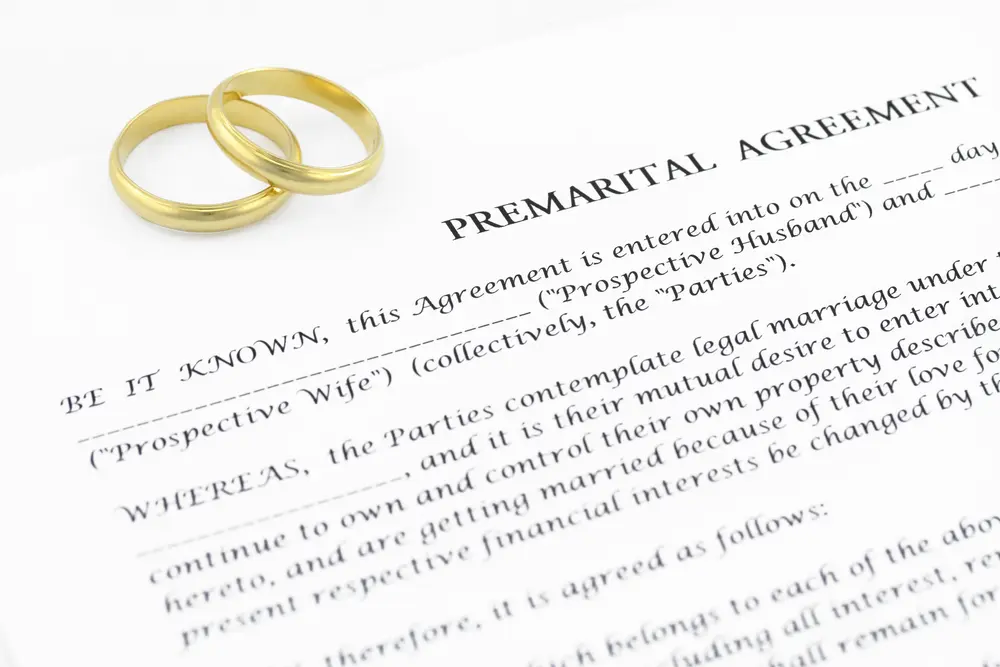
Postnuptial Agreements: Weighing the Benefits

September 16, 2023 By Anthony Diaz

If someone asked you what the benefit of a prenuptial agreement is, you likely would have some kind of answer or at least, a general understanding of why people sign prenuptial agreements. But postnuptials are less often used and are seen as a bit more controversial to many.

But there are benefits to postnuptial agreements, and in the right situation, a postnuptial agreement can help you in ways you probably didn’t think about.

What is a Postnuptial Agreement?

Premarital Agreement

A postnuptial agreement is, as the name implies, an agreement that you sign with your spouse that is almost exactly like a prenuptial, except for the fact that it is signed during the marriage, not beforehand.

The agreement can address things like who will get what property, what property is considered marital or non-marital, alimony, use of the marital home, and other issues.

Married couples are not supposed to be adversaries, and they certainly are not at “arm’s length” from each other, as parties to a contract are supposed to be. There is the inherent risk of coercion, pressure, or misrepresentation between spouses who are signing a contract between them, whether done purposely or whether it happens just because of the nature of the marital relationship.

To be valid, there must be witnesses to the signing of the agreement, which must be in writing, and although a married couple likely already knows each others’ finances, assets, and possessions, a full financial disclosure to each spouse must be made.

This means producing all relevant books and records—it is not enough to just say a spouse had access to records or “could have looked at my bank account.”

The Benefits of a Postnuptial

So why would anybody want a postnuptial agreement?

In many ways, the reasons are the same that anybody would want a prenuptial agreement: to minimize or avoid completely the time, heartache, and expense of a contentious, bitter divorce, should that happen.

A postnuptial agreement can give the parties some security, knowing what exactly they will get, keep, or give up in the event of a divorce. That is in addition to the security of knowing that there will be no or minimal fighting over these things should a divorce happen.

Postnuptials may help keep marriages intact. A couple on the verge of a divorce may opt to stay together and try to make things work if they know that there is a postnuptial in place. So, a party may say, “We can try to work on the marriage if we come to an agreement as to what happens if things don’t work out.”

Avoiding Risks or Waste of Marital Assets

A spouse may opt to stay in a marriage despite knowing that one spouse is taking a big business financial risk or knowing that a spouse is wasting money. A spouse may just have a sense that something is being hidden, money is being spent, or that loans are being taken out by the other spouse. Rather than just leave the marriage, that spouse may be more inclined to stay and work things out, knowing a postnuptial is in place.

Inheritances

A postnuptial can help you keep assets that are yours but which you may want to use to help the marriage.

For example, imagine that you come into an inheritance. That is, at least at first, your property. But the marriage needs that money—perhaps you want to pay off the mortgage, help with debt, help your spouse start his or her business, or use the money for anything else that benefits the marriage.

By doing that, you potentially transform that inheritance from non-marital property, not subject to division, into marital property that could be divided in a divorce.

But a postnuptial can prevent that. If the spouses agree that the inheritance is and remains non-marital property, it frees that money up to be used to benefit the marriage, without the inheriting spouse fearing that if there is a divorce, that non-marital property will be considered to be marital.

Using Non-Marital Assets

A postnuptial agreement can allow spouses to put one spouse’s money into an interest-bearing account or into some other kind of investment and use the interest however they choose, without fear that doing so would make the principal investment into marital property, subject to division in divorce.

Protecting Outsiders Gifting Assets

Even third parties outside the marriage may benefit from a postnuptial.

Take the parents of a spouse who want to help the new couple buy a home. However, they want to make sure that if there is a divorce, the home (or money from the sale of the home) goes to their child—that it is not divided up between the spouses on divorce.

A postnuptial can specify that a gift from someone outside the marriage to a spouse remains the property of that spouse, thus allowing the third party (the parent in our example) to give whatever is needed and allowing the marriage to benefit from the use of the gift.

Sacrifices for the Marriage

Postnuptial agreements can make it easier and safer for one spouse to forego their career for the benefit of the marriage.

Imagine a spouse who gives up a career opportunity to help the other spouse with their business or to help raise kids. That spouse can be protected in the event of a divorce through the use of a postnuptial, making it safer and more palatable for the spouse to give up career or other personal opportunities to help benefit the marriage.

Changes in Your Life

Any change in lifestyle or situation that could affect finances may call for a postnuptial agreement. This can include blended families, or someone losing a job, or getting a  significant promotion. Inheritances, bonuses, financial windfalls, or even medical hardships may cause a couple to want to make sure they are protected in the event of a divorce.

A postnuptial agreement can be a valuable tool to help you protect your assets and your marriage.

Anthony J. Diaz is an experienced family law attorney focusing on Mediation and Collaborative Divorce. His offices are located at 2431 Aloma Ave Suite #124, Winter Park, FL. 32792 and 3720 Suntree Blvd., Suite 103G, Melbourne, FL. 32940.

You may contact Anthony Diaz by calling 407-212-7807 or by email an*****@************aw.com or visit anthonydiazlaw.com for more information.

And if you found this article helpful, please leave us a review HERE.

Filed Under: Prenuptial Agreements Tagged With: Postnuptial Agreements

Parenting Plans: Crafting an Effective Framework

August 15, 2023 By Anthony Diaz

When you are going through a divorce with children involved, there are a lot of issues that need to be worked out between the parents when it comes to raising the children and paying for their needs. Even if you do agree on things like child support, visitation, or time-sharing, themselves contentious, time-consuming issues to work out, there are still so many details that need to be agreed upon by the parents.

Who will pick up and drop off the kids? What extracurriculars will they participate in, and who pays? What about uncovered medical expenses? Who decides on the child’s diet? Literally, every detail of a child’s life needs to be coordinated between the two now-divorced parents.

A Lot of Fighting

In the old days, this led to a lot of very costly, time-consuming, and expensive fighting. Getting parents who may be hostile to one another to agree to anything is tough, but now they have to agree to every single detail about raising the child, now and in the future, and coordinate their co-parenting activities as divorced parents.

If parents forgot any detail about any of this when the divorce was finalized, they would likely be back in court, fighting about it later on.

The Move to Parenting Plans

That’s why, in 2018, Florida moved to what is known as a parenting plan. A parenting plan is a pre-written form, with almost every detail about the child’s life, upbringing, and coordination between parents, pre-written on a form. All the parents have to do is fill in blanks or check in boxes.

The parenting form, which can be found here, contains things that you may not, at first, think about. For example, the form has:

  • Every detail of when the children are with which parent, both on a regular basis, as well as during extended school breaks and holidays. The plan has model time-sharing schedules, which provide equal or near equal time with each parent (sometimes called 4/3/3/4, 7/7, 2/2/3/3, Or 2/2/5/5 rotating schedules), but the parents can opt for an unequal schedule, where one parent has more than 50% of the overnights with the kids.
  • Who registers the kids in extracurricular activities, and who pays for what percentage of the expenses related to the activities.
  • When it comes to time with the kids when the kids don’t have school, which child’s school schedule will be used (if there are multiple kids in different schools).
  • How emergency time-sharing changes are handled.
  • Who gets to choose vacation dates with the child first.
  • Who transports the kids to the other parent, and who pays what percentage of those costs.
  • Which parent’s address is used as the contact address for the kids.
  • How often and by what medium the parents can communicate with each other, as well as with the kids when they are with the other parent.

Parents may also want to include items for the future, especially if there are young kids so that the parenting plan doesn’t need to be revisited when young children reach the teenage or young adult years.

This is just a short list to give you an example of the detail that is contained in a parenting plan. At first, it may seem onerous to fill the entire form out. But the goal is to reduce the confusion and ambiguity that often lands parents back into court later on and to provide clarity about the rights and responsibilities of the parents.

There is even a separate parenting plan for parents who are long distance from each other, with provisions that are unique to parents in this situation. There are separate parenting plans for parents who are generally amenable to working out problems or situations as they may arise in life, and a more structured, rigid plan, for parents who do not work well together and, thus, may need more details included in the parenting plan.

You Can be Flexible

Although the parenting plan is a pre-written “fill in the blank” form, that does not mean that parents have to stick to the constraints of the form. Parents are free to modify, add to, or alter the form in whatever way fits their unique situation.

There is no right way or wrong way to fill out a parenting plan. The parents can model the plan how they see fit, with whatever provisions work for them. For example, parents can include who will pay for a minor’s car when the minor gets old enough or how the parents will save money for the child’s eventual college education. Parents can add, subtract or modify language in the plan.

Parents who resolve their differences through mediation or some other out-of-court resolution have more flexibility, given that they can craft whatever they want in a parenting plan without just relying on what a judge decides.

A judge will ultimately have to approve of a parenting plan, but so long as the parties agree and there is nothing harmful in the plan to the children, most judges will approve the plan that the parents have agreed to in mediation or through negotiation.

Considerations for the Parenting Plan

There are a number of factors you should consider when filling out your parenting plan. Some of the more important ones include:

  • How well the parents get along and communicate—the better communication is, the less rigid or detailed the parenting plan may have to be
  • If a parent has a less flexible work schedule or a schedule that does not work as well with a child’s school schedule, that should be considered
  • If a parent may, possibly, need to relocate more than 50 miles from the other parent
  • How familiar the child is with his or her school or neighborhood, and the proximity to the child’s friends or extended family
  • Whether a child has special needs or disabilities which may alter the ability of the child to go from one home to the other on a regular basis

Your parenting plan is a vitally important document in your divorce and in your child’s life. Make sure you have attorneys that can explain it to you and give you the pros and cons of any decisions or choices you make on the form. We can help you craft a parenting plan that works for you. Contact us for help with your time-sharing and child custody case or for help with your parenting plan.

Anthony J. Diaz is an experienced family law attorney focusing on Mediation and Collaborative Divorce. His offices are located at 2431 Aloma Ave Suite #124, Winter Park, FL. 32792 and 3720 Suntree Blvd., Suite 103G, Melbourne, FL. 32940.

You may contact Anthony Diaz by calling 407-212-7807 or by email an*****@************aw.com or visit anthonydiazlaw.com for more information.

And if you found this article helpful, please leave us a review HERE.

Filed Under: Co-Parenting, Divorce and Children Tagged With: Parenting Plans

  • « Go to Previous Page
  • Page 1
  • Interim pages omitted …
  • Page 7
  • Page 8
  • Page 9
  • Page 10
  • Page 11
  • Interim pages omitted …
  • Page 13
  • Go to Next Page »

Primary Sidebar

Recent Posts

  • How to Calculate and Modify Child Support: A Practical Guide for Parents
  • When to File for Divorce: Fourth Quarter or After January 1?
  • Child Support Essentials: Understanding Your Rights and Responsibilities
  • Divorce and Making a Smooth Back-to-School Transition
  • Understanding the Dissolution of Marriage Process: Key Insights for a Smooth Transition

Footer

The Law Firm of Anthony J. Diaz
2431 Aloma Ave Suite #124,
Winter Park, FL 32792
(407) 565-5908

3270 Suntree Blvd,
Suite #103G,
Melbourne, FL 32940
O: (321) 216-9166
F: (407) 374-3982

Privacy Policy

Copyright © 2026 - All Rights Reserved | Log in